




 Plan your trip
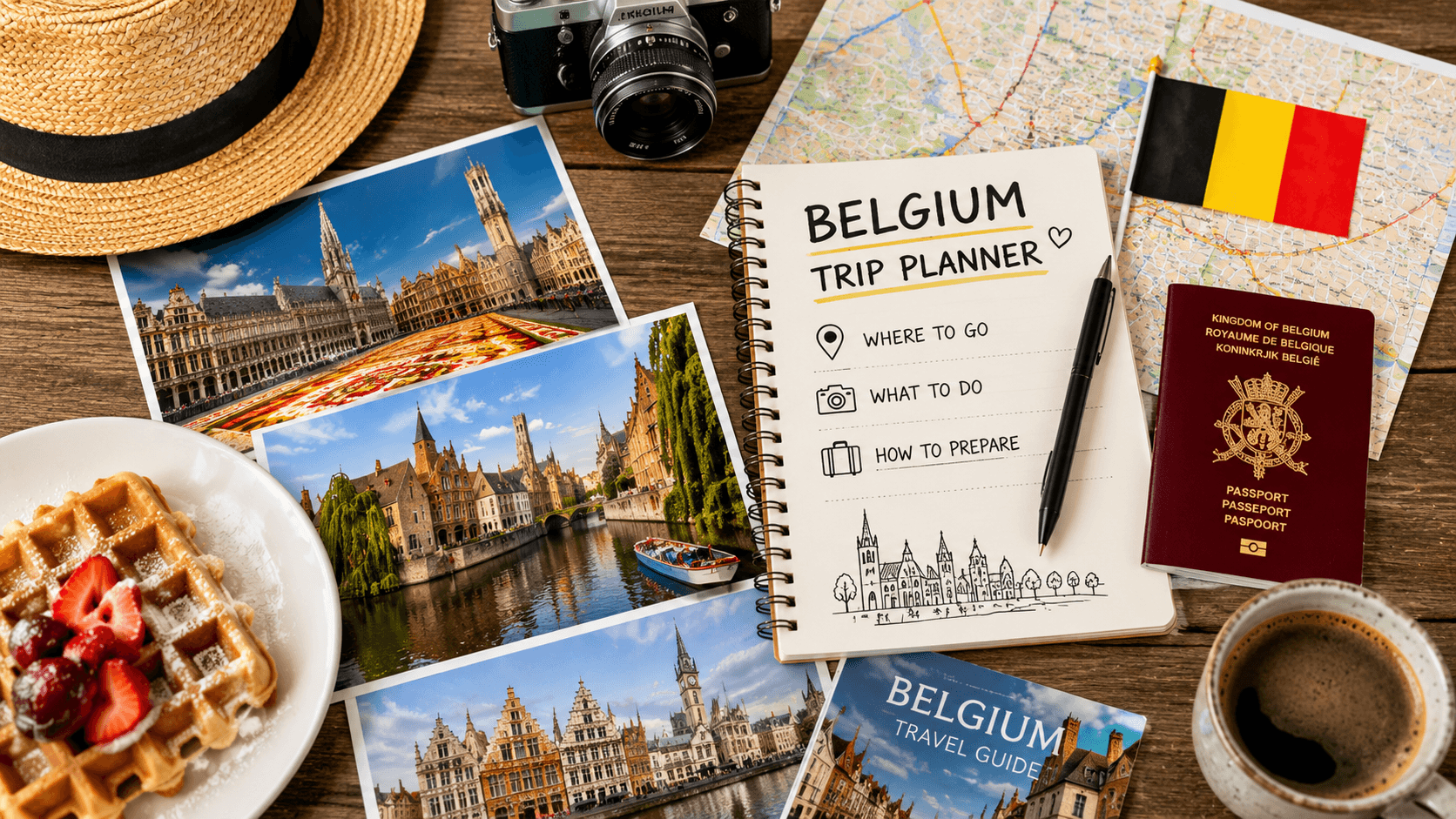
Belgium squeezes centuries of stone-carved history and rich culinary secrets into a pocket-sized kingdom smaller than Maryland. Visitors can wander through medieval belfries, visit renowned art collections, and walk past modern diplomatic hubs all in one afternoon. Mapping out this dense country requires some forethought, making a reliable Belgium Trip Planner: Where to Go, What to Do & How to Prepare highly useful for making the most of every hour.
This layout serves as your blueprint for a smooth journey across historic regions. Knowing the local geography helps you hop from crowded city squares to quiet, willow-lined canals without wasting a single day.
Famous Towns for Your Belgian Route
Brussels is the standard entry point for overseas flights landing at the national airport. The capital city presents a stark contrast between the gold-trimmed Grand Place and the glass towers of the European Union quarter. Set aside two full days to view the surrealist paintings at the Musée Magritte and climb the giant metal spheres of the Atomium.
When plotting your path through these historic hubs, keeping a Belgium Trip Planner: Where to Go, What to Do & How to Prepare handy keeps your daily pace comfortable. You will avoid wasting precious vacation hours on unnecessary trains.
A swift forty-minute train ride north brings you to Antwerp, a legendary center for diamond cutters and merchants. This stop caters to fashion designers and art lovers eager to tour the gardens and new experience center at the historic home of Peter Paul Rubens. The soaring stone arches of the Antwerpen-Centraal station make it look more like a cathedral than a transit terminal.
Bruges retains its medieval layout, complete with quiet canals and bumpy cobblestone paths. Walking through the car-free center reveals hidden herb gardens and whitewashed almshouses from the Middle Ages. The towering belfry rewards those who climb the 366 steep steps with a view across the entire region.
Ghent provides a lively alternative to Bruges, mixing ancient stone facades with a sprawling student population. The massive Gravensteen castle still features its original moat and a dark collection of medieval torture tools. Inside Saint Bavo Cathedral, the famous Ghent Altarpiece stands as a masterpiece of early Flemish painting.
Local Flavors and Useful Travel Tips
Local food culture goes far beyond standard European dishes, meaning you must leave room for long lunches. Trying authentic Trappist beers is a major highlight for beer lovers. Only a handful of active monasteries worldwide brew these official beers, and several of them are in Belgium.
Having a Belgium Trip Planner: Where to Go, What to Do & How to Prepare helps you balance heavy chocolate tastings with hours of walking. This variation keeps you alert and prevents museum fatigue.
Sweet-toothed travelers should spend an afternoon around the Sablon neighborhood in Brussels. Local confectioners host small workshops where you can learn to temper cacao and mold your own pralines. These hands-on lessons reveal the strict laws governing Belgian chocolate production.
- Belgian Waffles: Try the dense, sugar-crusted Liege variety as well as the light, airy Brussels style.
- Frites: Eat double-fried potatoes served with a dollop of fresh mayonnaise from small street kiosks.
- Carbonnade Flamande: Order a hearty plate of beef stew slow-cooked for hours in dark beer and fresh herbs.
Transit Routes and Getting Around
Getting from place to place is remarkably simple here. The national rail line, SNCB, runs clean trains between major cities with departures every few minutes. To manage your tickets and timing, referencing your Belgium Trip Planner: Where to Go, What to Do & How to Prepare keeps your travel days entirely stress-free.
| Route | Average Travel Time | Frequency |
|---|---|---|
| Brussels to Antwerp | 40 minutes | Every 15 minutes |
| Brussels to Bruges | 60 minutes | Every 30 minutes |
| Ghent to Bruges | 25 minutes | Every 20 minutes |
Paying attention to language boundaries prevents awkward encounters on the road. The northern half of the country speaks Dutch, while southern residents speak French. Brussels is bilingual, so expect to see street signs written in both tongues.
How to Shape Your Trip by Season
Choosing the right month changes your whole perspective. Spring triggers the famous bluebell bloom in the Hallerbos forest, covering the ground in a thick violet carpet just south of Brussels. December brings wooden market chalets, sparkling lights, and hot mulled wine to the old town squares.
Packing smart is a key topic in any Belgium Trip Planner: Where to Go, What to Do & How to Prepare. The local weather is famously fickle, so carrying a small umbrella and wearing light layers keeps you comfortable when a sudden shower rolls in.
- Comfortable Walking Shoes: These are a necessity for coping with the bumpy, uneven cobblestone streets in medieval quarters.
- Reusable Water Bottle: Tap water is completely safe, though you will rarely find public fountains on the street.
- Contactless Payment Card: Most shops expect card payments, though keeping small coins handy is useful for pay toilets.
To see local traditions up close, use your Belgium Trip Planner: Where to Go, What to Do & How to Prepare to align your dates with one of these annual celebrations.
- Ghent Light Festival: A three-year cycle event where artists use historic canal houses as backdrops for massive light installations.
- Ducasse de Mons: A historic festival in Wallonia featuring a giant public reenactment of Saint George fighting a dragon.
- Brussels Beer Weekend: A massive gathering on the Grand Place highlighting centuries of regional brewing traditions.
Wrapping Up Your Travel Plans
Solid planning removes the headache from your travels. Focusing on short train hops and regional dishes will make your European vacation truly memorable. Following a smart Belgium Trip Planner: Where to Go, What to Do & How to Prepare ensures you glide through the country without unnecessary stress.
Keep your Belgium Trip Planner: Where to Go, What to Do & How to Prepare updated and lock in your hotel rooms several months ahead. This is especially true if you plan to visit during the busy mid-summer months or the winter holidays.


Comments are closed