




 Brunches in belgium
Introduction to Belgian Gastronomy
Belgium packs an astonishing array of flavors into a tiny geographic footprint. This honest Belgian Food Guide: Best Dishes, Desserts & Drinks to Try charts the historical paths of the nation’s most celebrated recipes. You will discover how simple home-cooked meals evolved into national icons.
Many travelers miss the deeper culinary landscape, stopping only for quick street snacks. Consulting a reliable Belgian Food Guide: Best Dishes, Desserts & Drinks to Try helps you navigate historic taverns and celebrated dining rooms alike. This preparation turns an ordinary holiday into a true feast of discovery.
Classic Savory Masterpieces in Belgium
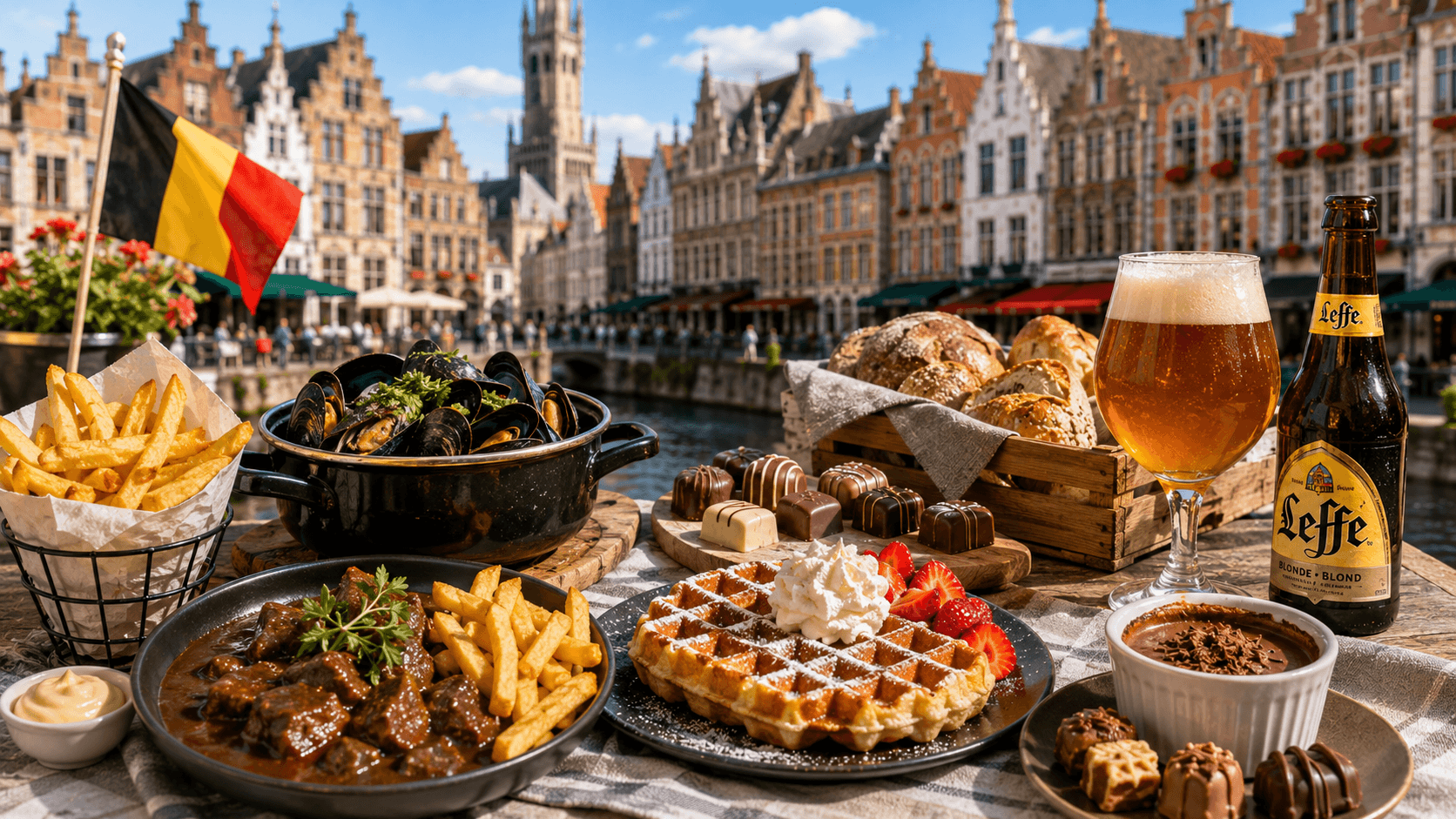
Carbonnade Flamande is the definitive Belgian comfort food. Kitchens slow-cook this beef stew for hours in dark Abbey ale until the onions melt and the meat falls apart. The slow-simmering method draws deep malt tones directly into every bite.
True regional recipes demand specific local brews like Chimay Blue to secure that trademark sweet-and-sour depth. Cooks serve this masterpiece alongside hot, double-fried frites. This pairing of rich gravy and salty potatoes remains a cornerstone of local life.
Moules-Frites brings the cold North Sea straight to the table. Chefs steam these fresh mussels with white wine, shallots, and a handful of chopped parsley. Most local taverns serve the dish directly in the black iron pot used on the stove.
Consulting a trustworthy Belgian Food Guide: Best Dishes, Desserts & Drinks to Try ensures you find authentic neighborhood taverns. This helps you bypass crowded tourist traps that shortcut age-old cooking techniques. Local dining experiences reward those who seek out genuine methods.
Iconic Street Food and the Art of the Belgian Fry
Real frites are a cultural institution, not a mere side dish. Frymasters double-cook the potatoes in beef fat to get a crisp outer shell and a pillow-soft middle. They slice each potato to a thickness of around ten millimeters to ensure the perfect bite.
Tiny street kiosks, called fritkoten, serve these hot treats with dozens of house-made sauces. Sampling options like Andalouse or fiery Samurai is a rite of passage. Each sauce offers a sharp contrast to the rich, salty potatoes.
This section of our Belgian Food Guide: Best Dishes, Desserts & Drinks to Try underlines the joy of buying from these simple wooden stands. These unassuming street shacks serve the most honest food in the country.
- Andalouse sauce: A creamy mixture of mayonnaise, tomato paste, and sweet peppers.
- Samurai sauce: A fiery option that blends mayonnaise with hot chili paste.
- Joppiesaus: A sweet, curry-flavored sauce widely loved in northern regions.
Sweet Indulgences and Classic Desserts
Local waffles divide into two completely different families. The Brussels variety is airy, perfectly rectangular, and crispy on the outside. Bakers use a light, yeast-raised batter to get this delicate texture.
The Liege waffle features a heavy, sweet dough studded with coarse pearl sugar. As it bakes, the sugar melts and creates a sticky, caramelized coating. This rich treat is best eaten warm on the street corner.
Local chocolate makers follow strict standards that protect their craft. The Belgian Chocolate Code of 2007 bans cheap vegetable fats, demanding a high percentage of pure cocoa butter. Reading this Belgian Food Guide: Best Dishes, Desserts & Drinks to Try helps you find shops that preserve these high standards.
This Belgian Food Guide: Best Dishes, Desserts & Drinks to Try simplifies your hunt for true master chocolatiers. It guides you past mass-market souvenir shops toward tiny, independent workshops.
- Brussels Waffle: Light and airy, usually served warm with a simple dusting of sugar.
- Liege Waffle: Dense and sugary, designed to be eaten with your hands while walking.
- Speculoos: Spiced cinnamon biscuits traditionally served with hot coffee.
Legendary Drinks and Beer Culture
In 2016, UNESCO added Belgian beer culture to its cultural heritage list. The nation brews over fifteen hundred unique beers, from tart wild-fermented Lambics to strong Trappist ales. Every single pour has its own custom glass shaped to highlight the aroma.
Authentic Trappist beers must come from inside an active monastery. Monks oversee the entire process, and only five Belgian breweries hold this rare status. The proceeds support local charities and keep the quiet abbeys running.
Using our Belgian Food Guide: Best Dishes, Desserts & Drinks to Try to pair drinks with meals makes every dinner better. Matching local stews with their historic beer partners brings out hidden flavors.
- Trappist Dubbel and Tripel: Strong, deep ales brewed with dark candi sugar.
- Gueuze: A sharp, complex blend of young and aged Lambic beers.
- Witbier: Crisp wheat beer flavored with citrus peel and ground coriander.
Overview of Traditional Belgian Specialties
| Dish / Drink | Type | Key Features |
|---|---|---|
| Carbonnade Flamande | Savory Stew | Beef slow-simmered in dark abbey ale with sweet onions. |
| Moules-Frites | Seafood | Fresh coastal mussels steamed with white wine and herbs. |
| Liege Waffle | Dessert | Heavy, sweet dough loaded with caramelized sugar crystals. |
| Trappist Beer | Beverage | Monastery-brewed ales made under strict monastic rules. |
Final Takeaways for Your Culinary Journey
Eating your way across Belgium reveals a deep respect for slow methods and pure ingredients. This Belgian Food Guide: Best Dishes, Desserts & Drinks to Try helps you find the old-school standards protected by culinary guilds.
Try beef stew in Ghent, enjoy mussels on the coast in Ostend, and grab warm waffles in Liege. Look for small taverns with local certificates on their windows. This path leads to honest food in every province.
Pouring the correct beer with each plate completes the experience. Designing your days around these classic meals guarantees a memorable trip in 2026.


Comments are closed