




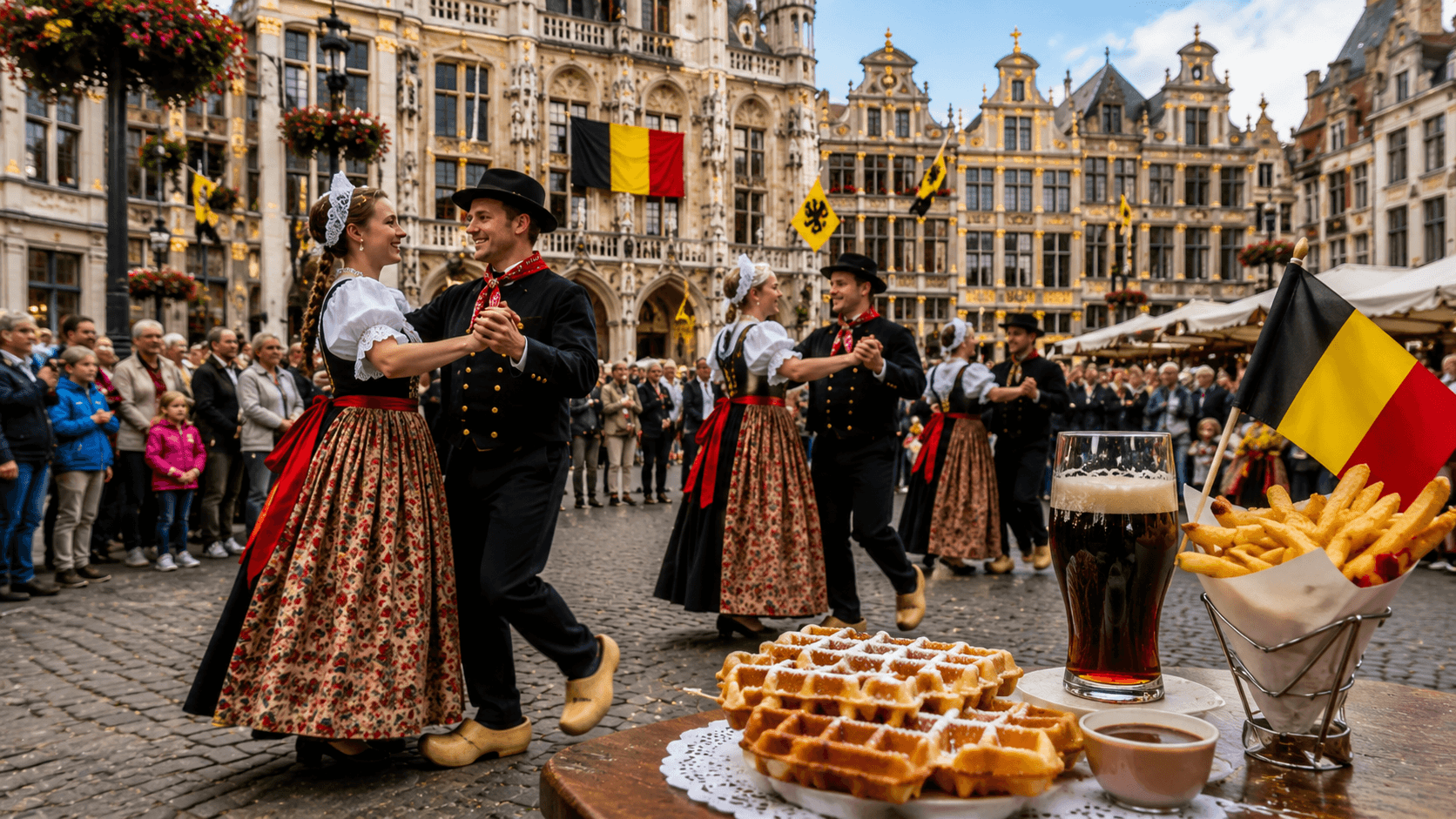
 Local culture
Belgium crams immense cultural weight into a pocket-sized territory smaller than Maryland, boasting upwards of 1,500 distinct beers and three official tongues. This overview details the necessary cultural protocols, historical pageants, and regional manners required to traverse the territory with ease.
Grasping the unique Belgian Traditions and Customs Every Traveller Should Know guarantees a respectful, smooth journey through this multi-layered European nation.
Linguistic Diversity and Regional Identity
Belgium divides into Dutch-speaking Flanders to the north and French-speaking Wallonia down south, along with a tiny German-speaking pocket out east. This divide governs daily routines, local civic life, and how people choose to speak to one another.
The capital, Brussels, maintains official bilingual status, even if French dominates the actual street corners.
Steering through these linguistic borders demands social agility. Visitors must adapt their greetings to match the exact municipality they enter. Starting a chat in the proper local tongue, or asking politely in English, represents a basic courtesy locals value.
Learning these nuances remains a major element of the Belgian Traditions and Customs Every Traveller Should Know before packing a bag.
Mastering the Etiquette of Belgian Beer Culture
UNESCO recognized Belgian beer culture on its heritage list in 2016. Every single style of brew demands its own dedicated glassware to release specific aromas and hold the foam correctly.
Dumping a rare Trappist ale into a basic pint glass counts as a massive social blunder in neighborhood taverns.
This careful serving ritual represents one of the core Belgian Traditions and Customs Every Traveller Should Know before pulling up a barstool. Local barkeeps take serious pride in serving pints at the perfect temperature in the exact glass built for that specific recipe.
Wait to lift your chalice until every person at the table is served. Locking eyes with your drinking partners while declaring Santé or Schol is a non-negotiable social rule.
- Always respect the dedicated glassware provided for each specific beer brand.
- Avoid ordering mainstream international lagers when local artisanal brews are available.
- Leave the yeast sediment at the bottom of the bottle unless specifically instructed otherwise.
Dining Protocols and Culinary Traditions
Sitting down for a meal in Belgium is a slow, revered ritual that easily eats up an entire evening. Locals despise rushing through dinner, preferring to linger over empty plates. Service fees are baked right into the bill, rendering tips purely voluntary but welcome for stellar service.
Double-fried potatoes, known locally as frites, carry immense national pride and come paired with heavy mayonnaise instead of tomato ketchup.
Placing an order at a neighborhood street shack, or fritkot, serves as another classic example of Belgian Traditions and Customs Every Traveller Should Know. These simple stands function as local meeting grounds where politicians and laborers rub shoulders.
Chocolate hunting demands equal care. Genuine Belgian chocolate relies on pure cocoa butter with zero cheap oil substitutes.
Indeed, recognizing pure chocolate from cheap tourist souvenirs is part of the basic Belgian Traditions and Customs Every Traveller Should Know.
Seasonal Festivals and Public Celebrations
Local communities protect ancient street parties dating back to the middle ages. The Carnival of Binche showcases costumed Gilles figures hurling blood oranges into the crowd for luck. Joining in these celebrations requires an appreciation for neighborhood boundaries and old lore.
Witnessing these spectacles highlights how deeply Belgians guard their regional history. The Gentse Feesten in Ghent ranks among the massive street gatherings of Europe, drawing over a million revelers across ten days. Booking your train tickets and rooms half a year ahead is vital if you plan to attend.
Navigating these crowded, historic celebrations is much easier when you familiarize yourself with the Belgian Traditions and Customs Every Traveller Should Know.
| Festival Name | Location | Timing | Primary Highlight |
|---|---|---|---|
| Carnival of Binche | Binche | February (Shrove Tuesday) | UNESCO-recognized parade of the Gilles |
| Procession of the Holy Blood | Bruges | Ascension Day (May) | Historical religious pageant |
| Brussels Flower Carpet | Brussels | August (Every two years) | Grand-Place blanketed in dahlias |
Social Interactions and Daily Etiquette
Belgian citizens treasure their personal space and often seem guarded when meeting someone new. A firm, brief handshake remains the standard for introductions and professional settings. Close companions quickly switch to a single cheek kiss, usually starting on the right side.
Knowing when to drop the handshake for the cheek kiss is a subtle dance. Show up exactly on time for dinner parties. Arriving late without warning insults your host and violates local codes of conduct.
Regional Differences Between Flanders and Wallonia
The internal border separating the regions remains a serious political and emotional reality. Speaking French inside Flanders or Dutch within Wallonia can stir up quiet friction. Resorting to English as a neutral middle ground is the safest path for outsiders.
Recognizing this linguistic divide is at the heart of the Belgian Traditions and Customs Every Traveller Should Know when crossing regional borders. Traffic signs and town names swap instantly at the boundary. Keep a close eye on your map, since Dutch-speakers refer to Mons as Bergen.
- Use English as a default neutral language if unsure of the local linguistic preference.
- Learn basic greetings in both Dutch (for Flanders) and French (for Wallonia).
- Remember that Brussels is officially bilingual, meaning signs appear in both languages.
Essential Takeaways for a Smooth Belgian Journey
Navigating this land relies on respecting local boundaries, eating slowly, and valuing old provincial roots. Adapting to these habits shifts a standard vacation into a rich, memorable stay.
Mastering the Belgian Traditions and Customs Every Traveller Should Know allows outsiders to form genuine bonds with locals. Honoring the beer glass, respecting language lines, and showing up precisely on time show real appreciation for this unique culture.


Comments are closed